 Listicle
Best Metal Panels for Pole Barns: A Buyer's Guide
Last Updated: November 22, 2026
Quick Summary
The best metal panels for pole barns depend on how the building will be used, how far panels must span between supports, whether the panel goes on the roof or wall, and your budget. Common profiles like Tuff Rib, PBR, and Panel-Loc are not interchangeable, since rib depth, spacing, and fastener style matter most.
- Taller, closely spaced ribs stiffen a panel and help it span farther between purlins.
- Exposed-fastener panels screw through the face, while concealed-fastener panels hide screws under a raised seam.
- A good siding panel is not automatically the right roof panel.
- A thicker panel with a poor coating can underperform a thinner panel with a good one.
- Pricing for these profiles is quote-based, so ask for current numbers before comparing budgets.
Table of Contents
- Comparing Pole Barn Metal Panel Profiles Side by Side
- Standing Seam and AG Panel Roofing for Barns
- What Pole Barn Metal Panel Warranties Actually Cover
- Frequently Asked Questions
Comparing Pole Barn Metal Panel Profiles Side by Side
The best metal panels for pole barns depend on how the building will be used, how far panels must span between supports, whether the panel goes on the roof or wall, and your budget. Before comparing profiles, you can learn how to identify quality metal roofing by panel type, gauge, coating, and warranty. Common profiles include Tuff Rib, Max-Rib, Mesa, PBR, Hi-Rib, MasterRib, Panel-Loc, 7.2 Panel, and Classic Rib, and they are not interchangeable, since rib depth, spacing, and fastener style matter most.
| Profile | Typical Use | Fastener Style | What Sets It Apart |
|---|---|---|---|
| Tuff Rib | Siding on pole barns | Exposed-fastener | A ribbed wall profile with a familiar look; commonly chosen for barn walls |
| PBR | Large pole barns | Exposed-fastener | A purlin-bearing rib panel used on larger buildings and wider spans |
| Panel-Loc | Roofing | Concealed-fastener | A standing-seam-style panel where appearance and fewer exposed screws matter |
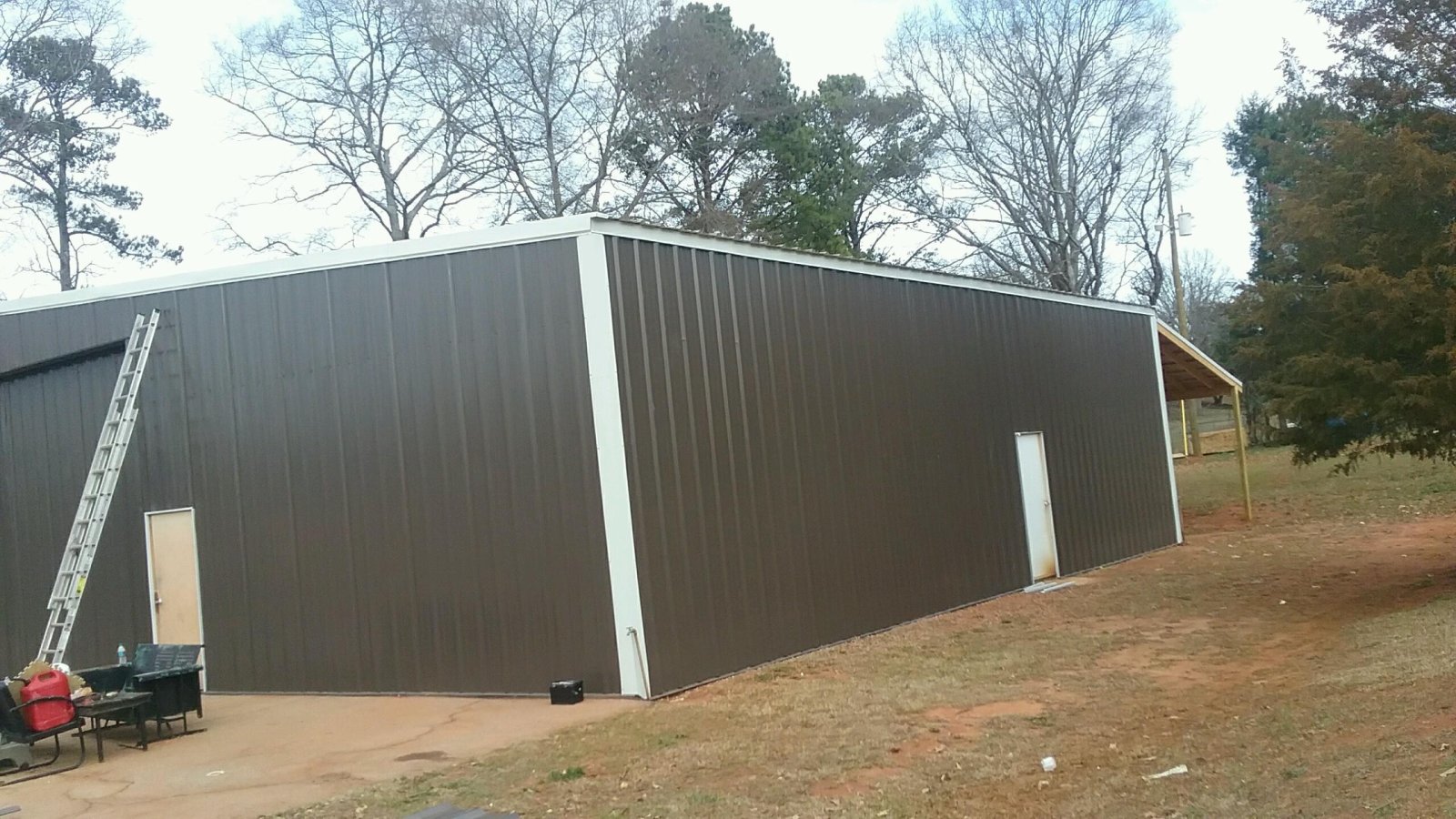
How the profiles differ. Taller, closely spaced ribs stiffen the panel and help it span farther between purlins, which is why PBR and Hi-Rib suit larger buildings and shallower pitches. Exposed-fastener panels screw through the face; concealed-fastener panels like Panel-Loc hide screws under a raised seam, cleaner looking, but costlier and more demanding to install.
Roof versus wall matters. A good siding panel is not automatically the right roof panel. Roof panels must handle water running down the slope, so rib height, overlap, and pitch interact; wall panels mainly shed water straight down and resist wind.
Gauge, substrate, and coating work together. Gauge is steel thickness, a lower number means thicker steel, but gauge alone does not predict performance. A thicker panel with a poor coating can underperform a thinner panel with a good one, so ask what substrate and coating are specified.
Match the panel to the building's use. Livestock barns need panel choice that works with ventilation and moisture; equipment storage prioritizes weather-tightness and impact resistance; workshops may favor appearance. There is no single best panel, only the best panel for your building, climate exposure, and budget.
Pricing is quote-based for these profiles, so ask for current numbers before comparing budgets. If you want help narrowing the list for a barn, workshop, or outbuilding in Georgia, contact Timeless Tin Metal Roofing for an estimate and we will walk through the profiles that fit your project. Our team also handles Pole Barns and Lean-Tos and can advise on which panel suits that style of building.
Standing Seam and AG Panel Roofing for Barns
Standing seam and AG Panel are the two systems we install most often, and both are common choices for metal panels for pole barns and outbuildings. The main difference is fastening: standing seam hides fasteners under raised seams, while AG Panel exposes them on the face. That single difference drives most of the trade-offs in cost, appearance, water handling, and upkeep.
How standing seam works. Standing seam panels join at raised seams above the roof surface, with fasteners concealed beneath them, no screw heads to back out or washers to degrade. The trade-offs are real: it usually costs more and needs careful installation. You can compare standing seam and AG Panel side by side on cost, durability, and leak risk.
How AG Panel works. AG Panel is an exposed-fastener system: screws go through the face of the panel into the purlins. It is a practical, cost-effective choice for barns, workshops, and farm buildings where function comes first. The trade-offs are equally real: exposed fasteners need periodic checking, and the look is more utilitarian.
What actually drives the decision.
- Roof pitch. Shallower pitches demand more of how the roof sheds water, often favoring a concealed-fastener system or taller-rib exposed panel.
- Purlin spacing and span. Wider spacing calls for a stiffer panel or a profile designed for longer spans.
- Building use. For a show barn, barndominium, or appearance-focused building, standing seam's clean look often justifies the premium; for a hay barn or equipment shed, AG Panel's function-first approach usually makes more sense.
- Climate and site exposure. Wind, hail, and corrosion exposure affect long-term performance; requirements depend on the specific location and project.
- Budget and lifecycle. Standing seam costs more upfront but removes exposed-fastener upkeep; AG Panel costs less upfront but asks for periodic fastener checks.
Either way, trim, closures, and flashing must be detailed correctly, the panel is only part of the roof. If your outbuilding needs more than a roof, our Metal Siding and Board-and-Batten work can be planned alongside it.
If you are weighing standing seam against AG Panel for a barn or outbuilding in Georgia, reach out to Timeless Tin Metal Roofing for an estimate and we will help you match the system to your building and budget.
What Pole Barn Metal Panel Warranties Actually Cover
Warranties are subject to applicable terms and conditions, and coverage differs by product and issuer. At Timeless Tin, we offer a 5-year workmanship warranty on AG Panel and a 10-year workmanship warranty on standing seam. Product warranties on color and corrosion are separate and come from the manufacturer.
Read the warranty before you buy. Check what is covered, what is excluded, and how long each part lasts. Never assume every metal roof carries the same protection. Our guide explains how corrosion warranties on metal roofing work in Georgia.
If you have questions about the warranty on your specific project, contact Timeless Tin for an estimate and we will walk you through the terms.
Frequently Asked Questions
What type of metal siding is best for a pole barn?
Exposed-fastener ribbed panels such as Max-Rib, Mesa, and 7.2 Panel are widely used on pole barn walls because they cost less than concealed-fastener systems. Board-and-batten profiles suit owners who want a more finished look. The right choice depends on how the building will be used, how much wind and impact exposure it sees, and your budget. Get a quote from Timeless Tin to compare options for your site.
Can the same metal panels be used for pole barn roofs and walls?
Some profiles are used for both roofs and walls, but roof and wall applications have different requirements for fastening, overlap, and span between supports. Larger profiles such as PBR and Hi-Rib are often chosen for big buildings. Confirm with your contractor which panel and gauge suit each part of the structure, since requirements depend on the specific building and project.
What should I check in a pole barn metal panel warranty?
Look at whether the warranty covers the finish, the steel, or workmanship, and how long each lasts. At Timeless Tin, AG Panel carries a 5-year workmanship warranty and a 40-year limited color warranty, while standing seam carries a 10-year workmanship warranty and a 50-year limited paint warranty. Both include 25-year rust and corrosion coverage on applicable Galvalume products. All warranties are subject to their terms and conditions.