 Ultimate guide
How to Identify Quality Metal Roofing: A Homeowner's Guide
Last Updated: November 12, 2026
Quick Summary
Quality metal roofing is a combination of panel gauge, substrate, coating, fastener system, and installation detail that holds up under Georgia heat, humidity, and summer storms. Knowing how to identify quality metal roofing comes down to reading the material list and the trim details, not the brochure.
- Gauge is a steel thickness measurement, and lower numbers mean thicker steel.
- Common panels run from 29-gauge up to 24-gauge, with 24-gauge used for standing seam and heavier residential work.
- Corrosion resistance starts with the substrate, so ask for the coating designation in writing.
- A paint warranty covers fading and chalkiness, while a corrosion warranty covers rust-through of the panel.
- Ask for the gauge of the panel and the trim separately, in writing.
Table of Contents
- What Quality Metal Roofing Actually Means in Georgia
- Metal Roofing Panel Types: Standing Seam vs. AG Panel
- Metal Roofing Gauge Comparison: Why Thickness Matters
- Coatings, Substrate, and Corrosion Resistance
- Metal Roof Paint and Coating Warranties Explained
- Flashing, Trim, and Fasteners: Where Leaks Start
- How to Choose a Metal Roofing Contractor
- Red Flags in Metal Roofing Quotes
- A Post-Installation Inspection Checklist
- Requesting a Metal Roofing Estimate in Georgia
- Frequently Asked Questions
What Quality Metal Roofing Actually Means in Georgia
Quality metal roofing is a combination of panel gauge, substrate, coating, fastener system, and installation detail that holds up under Georgia heat, humidity, and summer storms. At Timeless Tin, we tell homeowners the same thing: knowing how to identify quality metal roofing comes down to reading the material list and the trim details, not the brochure.
Georgia's climate is hard on roofs. Long humid summers, intense UV, and heavy afternoon thunderstorms punish thin panels and sloppy flashing. A roof that looks good on day one can fail at the seams within a few seasons if the wrong components were used.
Below, we walk through the factors that separate a sound metal roof from an expensive mistake, and how to audit a quote before you sign.
Metal Roofing Panel Types: Standing Seam vs. AG Panel
The two metal roofing panel types we install most are standing seam and AG Panel, and they solve different problems. Standing seam uses concealed fasteners with raised seams; AG Panel uses exposed fasteners and a simpler profile. Neither is "bad," but they suit different budgets and buildings.
For a deeper side-by-side breakdown before you decide, see our guide to standing seam vs AG Panel roofing.
Standing Seam: Concealed Fasteners and Clean Lines
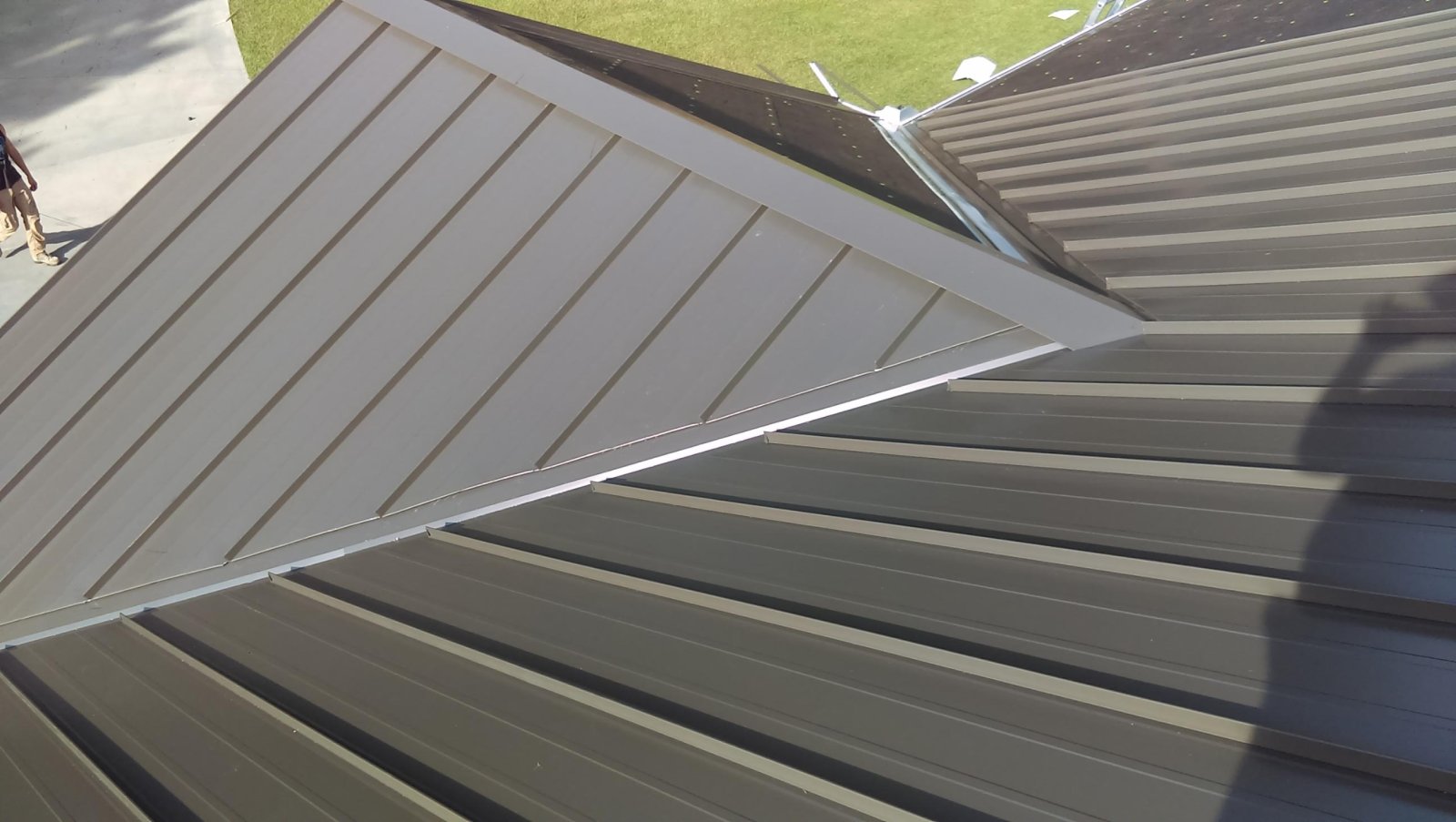
Standing seam panels lock together at raised seams, so no screws penetrate the face of the panel. That concealed fastener design removes the most common leak path and gives the roof its clean, linear look.
The trade-off is cost and complexity. Standing seam demands precise roll forming and careful flashing work, which is why workmanship matters so much on these roofs.
AG Panel: Exposed Fasteners and Practical Value
AG Panel is the practical choice for barns, shops, and budget-conscious homes. Exposed fasteners make installation faster, and the panels handle large roof areas well.
The catch: every screw is a potential entry point if it's overdriven or set with the wrong fastener. Fastener compatibility and installation discipline decide how long an AG Panel roof performs.
Metal Roofing Gauge Comparison: Why Thickness Matters
Gauge thickness is where a metal roofing gauge comparison gets honest fast. Gauge is a steel thickness measurement, and lower numbers mean thicker steel. The common panels you will see quoted on residential and agricultural work run from 29-gauge up to 24-gauge, and the difference between them is not cosmetic.
Here is the practical conversion most suppliers and installers work from:
| Gauge | Approximate Steel Thickness | Typical Use |
|---|---|---|
| 29-gauge | About 0.014 inch | Light-duty AG Panel on sheds and outbuildings |
| 26-gauge | About 0.018 inch | Standard AG Panel on barns, shops, and budget homes |
| 24-gauge | About 0.024 inch | Standing seam and heavier-duty residential work |
Approximate Steel Thickness
Those numbers are approximate because steel mills and roll formers vary slightly, but the ranking holds. A 29-gauge panel is thinner and more prone to oil canning and denting than a 26-gauge panel, and it flexes more underfoot and in wind. A 24-gauge standing seam panel holds its profile, resists impact better, and gives fasteners and seams more steel to bite into.
Thickness also drives how the panel behaves between supports. Thinner steel deflects more under wind uplift and foot traffic, which is why purlin spacing and clip spacing have to be tighter on light panels. On a storage building with a simple gable and no complex valleys, a lighter panel can be reasonable.
Watch out: gauge is not the only thickness variable. Some quotes list a "26-gauge" panel that is actually a painted-over thinner substrate, or they list gauge for the panel but not for the trim and flashing. Trim is often formed from lighter steel than the panel, and thin trim is where edges oil-can and fasteners pull. Ask for the gauge of the panel and the trim separately, in writing.
One more mechanism worth understanding: oil canning. It is the wavy, rippled appearance that shows up in flat areas of a panel, and it is driven by residual stresses in the steel, panel width, and how the panel is handled and fastened. Thicker steel resists it better, but no gauge eliminates it entirely. A bid that promises a perfectly flat panel with no oil canning at any gauge is overselling.
If a bid will not state the gauge, that is your first clue. A quote that lists "metal roof" with no thickness is not a comparable number, because the cheapest way to hit a low number is to drop a gauge and hope the buyer never asks.
Coatings, Substrate, and Corrosion Resistance
Corrosion resistance starts with the substrate, not the paint. The two substrates you will see quoted most on metal roofing are Galvalume and galvanized steel, and they protect the base steel in different ways.
Galvalume is steel coated with an aluminum-zinc alloy, and galvanized steel is coated with zinc only. Coating type and coating amount both affect how well the base steel is protected. Ask for the coating designation on the quote, not just the word "Galvalume."
Paint finish is the second layer of defense. A properly applied paint system with good adhesion resists fading and chalkiness, and it keeps the substrate from being exposed in the first place. Cheap coatings fail early, and once the coating breaks down, rust finds a foothold.
Watch out: rust rarely starts in the middle of a panel. It usually begins at cut edges, fastener heads, and anywhere water sits. That is why cut-edge treatment and touch-up matter. When panels are cut on site, the exposed steel edge has no coating, and a careful installer treats or seals those edges. Fastener heads are the other weak point, which is why fastener washers and heads need to be compatible with the panel coating. Our article on preventing rust on metal roofing covers the practical steps that extend a roof's life.
The same panel specification is not equally suited to every exposure, and buyers should match the coating to the building's conditions:
| Exposure | What Drives the Risk | What to Ask For |
|---|---|---|
| Humid, storm-heavy summers | Sustained moisture and heavy rain at seams and fasteners | Galvalume substrate with a documented coating weight and sealed cut edges |
| Coastal salt spray | Airborne chlorides attack cut edges and fasteners first | Heavier Galvalume coating, corrosion-rated fasteners, and confirmation that trim and flashing match the panel substrate |
| High-heat, high-UV exposure | Paint fade and chalkiness before the steel fails | A paint system rated for the exposure, with the paint warranty terms in writing |
| Snow and freeze-thaw | Ice at seams and flashing, plus abrasion from snow load | Heavier gauge and careful seam and flashing detail, since thin panels deflect and open joints |
That matrix is not a substitute for a site-specific review. Requirements depend on the specific location and project, and a roof near the coast or on an exposed ridge may need a different specification than one inland under tree cover. The point is to make the buyer ask the question instead of accepting a generic "metal roof" line item.
A common pattern is for low bids to specify a substrate by name but leave off the coating weight, the fastener finish, and the cut-edge treatment. Those omissions are where the corrosion risk can hide, so they are worth asking about.
Metal Roof Paint and Coating Warranties Explained
Warranties are only as good as the terms behind them, and paint and corrosion warranties are two different documents. A paint warranty typically covers fading and chalkiness; a corrosion warranty covers rust-through of the panel, not surface rust.
That distinction trips up a lot of buyers. Surface staining is usually excluded, and so is damage from scratches, cuts, or contact with incompatible materials. Read the exclusions before you assume you're covered.
For a plain-English breakdown of what these documents actually cover and exclude, read how to read metal roofing corrosion warranties in Georgia.
| Warranty Type | What It Typically Covers | What It Usually Excludes |
|---|---|---|
| Paint finish | Fading, chalkiness, peeling | Scratches, surface rust, chemical damage |
| Corrosion (rust-through) | Rust-through of the panel | Surface rust, cut edges, fastener rust |
| Workmanship | Installation defects | Storm damage, owner modifications |
Flashing, Trim, and Fasteners: Where Leaks Start
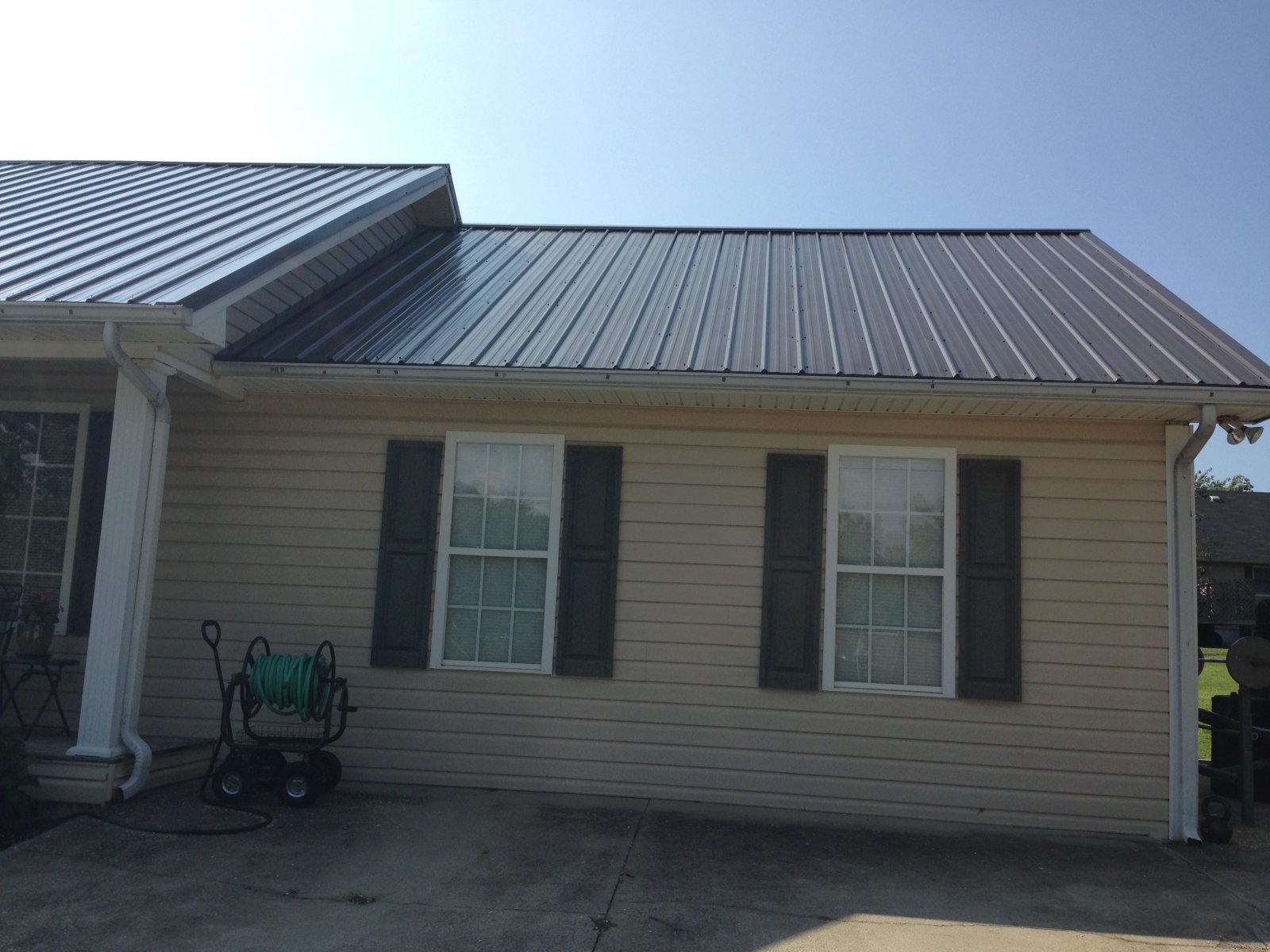
Flashing and trim work is where most leaks on metal roofs start. Ridge caps, sidewall flashing, valleys, and penetrations are the joints where water gets its chance, and the detail work there separates a careful installer from a fast one.
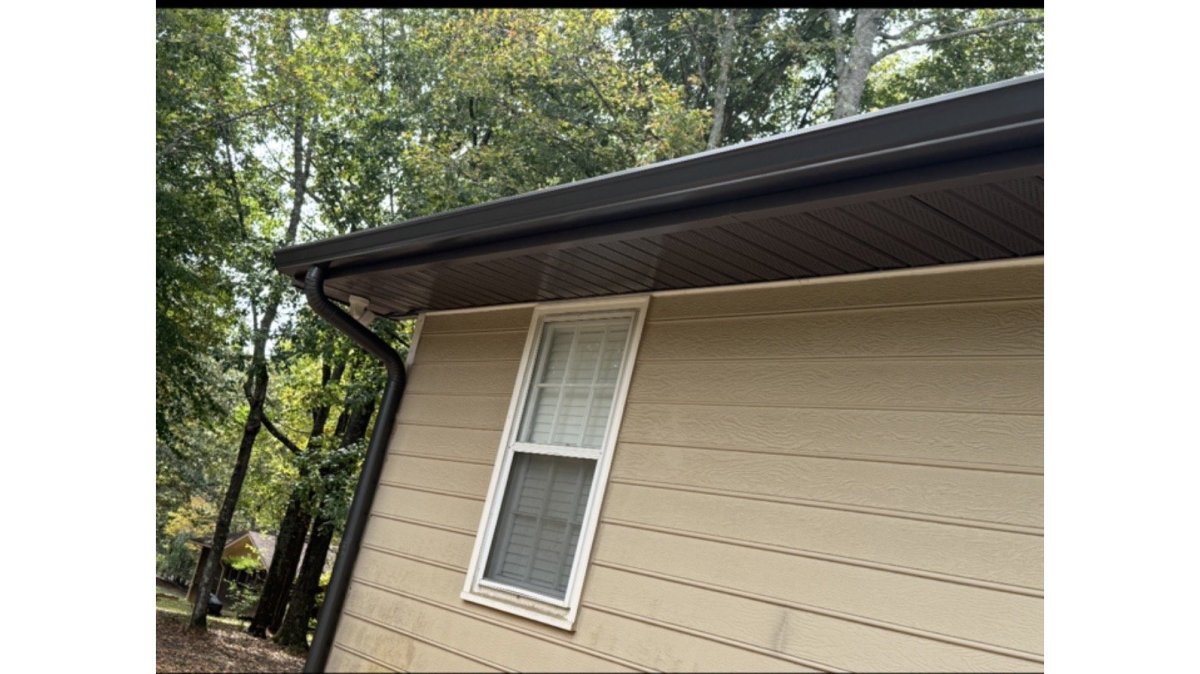
Trim detail and water intrusion are closely linked on metal roofs, so they should be treated as one problem. A roof can have premium panels and still leak if the flashing is rushed or the fasteners are wrong. That is also why we finish the edges with metal soffit and fascia rather than leaving them to a separate trade, so the same crew that sets the panels also closes out the perimeter.
Fastener compatibility is the other half. Screws must match the panel material and be set with the correct washer and torque. Overdriven screws can crush the washer and back out over time, and underdriven ones can leave a gap. Metal roofs call for attention to detail rather than rushing the job.
How to Choose a Metal Roofing Contractor
Choosing a metal roofing contractor is really a test of track record and focus. Ask how long the business has operated, whether it specializes in metal, and who will actually be on the roof. Many fly-by-night companies claim experience they don't have.
Here's the checklist we'd want a homeowner to use:
- Confirm years in business and ask for proof
- Ask whether the company specializes in metal roofing or does everything
- Request the panel gauge, substrate, and coating in writing
- Ask who performs the installation and how long they've done it
- Get the workmanship warranty in writing, with terms
- Ask to see finished work and speak with past customers
- Confirm the quote includes flashing, trim, and fasteners by name
A contractor focused on metal roofing is well placed to catch the details that matter on these roofs.
Red Flags in Metal Roofing Quotes
Red flags in a metal roofing quote usually show up as gaps, not typos. A bid that lists "metal roof" with no gauge, no substrate, and no coating is hiding the variables that decide quality. If the numbers can't be compared, they're not really a quote.
Watch for these:
- No gauge or thickness stated anywhere
- Fasteners or flashing left out of the line items
- A workmanship warranty with no written terms
- Pressure to sign before you've seen the details
- A price that's dramatically lower with no explanation of what changed
A vague quote protects the seller, not you. Ask for specifics and expect a straight answer.
A Post-Installation Inspection Checklist
A post-installation inspection is your last chance to catch problems while the contractor is still responsible. Walk the roof with the installer, or have them walk it with you, and check the details that matter.
- Seams are fully locked and uniform
- Fasteners are straight, properly set, and not overdriven
- Ridge, sidewall, and valley flashing are tight and sealed
- No panel oil canning or dents from installation
- Trim and fascia line up cleanly at edges
- Penetrations are flashed and sealed
- Debris and metal shavings cleared from the roof and yard
Metal shavings left behind are a quiet problem: they rust and stain the panel. Have them swept.
Requesting a Metal Roofing Estimate in Georgia
Getting a metal roofing estimate in Georgia should start with a conversation about your building, not a number over the phone. Roof size, pitch, panel type, trim complexity, and access all shape the scope, and a real estimate reflects them.
Timeless Tin Metal Roofing LLC was established in Georgia in 2001, and we focus on metal roofing and exterior metalwork for properties around Locust Grove and the surrounding region. We offer workmanship warranties on projects. We install standing seam and AG Panel systems supplied by Victory Metals, with product warranties that vary by system and are subject to applicable terms and conditions.
If you're weighing a metal roof for a home, barn, or commercial building, request a free estimate and we'll walk your roof, explain your options, and put the details in writing.
A metal roof is a long-term decision, and the difference between a good one and a problem roof lives in the details: gauge, coating, flashing, and the crew doing the work. If you want a straight answer on what your building needs, get started with Timeless Tin and request a free estimate backed by clear communication, metal-only expertise, and warranties we stand behind.
Frequently Asked Questions
What should I look for in quality metal roofing?
Start with the panel type, the steel gauge, the substrate coating, and the paint system. Ask for the panel profile, whether fasteners are concealed or exposed, and what the Galvalume or zinc coating offers. Then check the warranty documents: who backs the paint, who backs the corrosion protection, and who backs the installation. Quality metal roofing shows up in the paperwork as much as the panels, so compare quotes line by line rather than on total price alone.
Which is better, 26 or 29 gauge metal roofing?
A metal roofing gauge comparison comes down to thickness and stiffness. Lower gauge numbers mean thicker steel, so 26-gauge panels are heavier and resist denting and oil canning better than 29-gauge panels, which are lighter and more economical. For a home where appearance and long-term durability matter, 26-gauge is often the stronger choice. For barns, sheds, and budget-focused outbuildings, 29-gauge AG Panel can make sense. Ask your contractor which gauge is quoted and why.
What should a metal roofing warranty cover?
A complete package has three parts: a workmanship warranty from the installer, a paint finish warranty from the panel manufacturer, and a rust or corrosion warranty on the substrate. Read the terms carefully. Paint and corrosion warranties are limited, and their terms should be read carefully. At Timeless Tin, our AG Panel carries a 5-year workmanship warranty and standing seam carries 10 years, with product warranties subject to applicable terms and conditions.
How do I choose a reliable metal roofing contractor?
Check how long the business has operated, confirm it specializes in metal rather than treating it like shingles, and ask to see finished work and speak with past customers. Get a written scope that names the panel, gauge, coating, trim, and fasteners. Ask who handles warranty claims and how long the crew has installed metal. A contractor who answers those questions clearly and puts them in writing is far safer than one who quotes a low number and stays vague on details.
Will a metal roof rust in Georgia's humidity?
Rust risk depends on the substrate and coating, not humidity alone. Galvalume steel combines zinc and aluminum for corrosion resistance, and quality panels carry a rust or corrosion warranty on applicable products. The bigger practical risks are cut edges left unsealed, incompatible fasteners, and trapped moisture from poor flashing. Ask what corrosion warranty applies to your panel, confirm fastener compatibility, and make sure trim details shed water away from seams and penetrations.
Can standing seam be installed on a small rural property?
Yes. Standing seam works on homes, workshops, and small rural buildings, not just large commercial roofs. The concealed-fastener design gives clean lines and reduces the number of penetration points, which suits homeowners who want a finished look. It costs more than AG Panel because of the panel profile and installation detail, so weigh that against how long you plan to own the building. We install both systems and can walk you through which fits your structure and budget.