 Listicle
Are Standing Seam Metal Roofs Worth the Investment?
Last Updated: November 17, 2026
Quick Summary
A standing seam metal roof delivers hidden fasteners that reduce leak points, raised seams that add stiffness and wind resistance, and coatings backed by a 50-year limited paint warranty and a 25-year rust/corrosion-free warranty on applicable Galvalume products. The trade-off is a higher upfront cost than exposed-fastener AG Panel, along with a 10-year workmanship warranty from us versus 5 years on AG Panel.
- Panels attach with clips or fasteners beneath the raised seam, so no exposed screw heads work against rain.
- The folded seam acts like a structural rib running up the slope, helping the panel resist uplift in high-wind events.
- Standing seam generally costs more than an exposed-fastener AG Panel system because panels, clips, and labor are more involved.
- Metal expands and contracts with temperature swings, so good design uses the right clip system and panel length limits.
- Complex roofs with many valleys, dormers, and penetrations require more cutting and trim, raising cost.
Table of Contents
- What a Standing Seam Metal Roof Actually Delivers
- Standing Seam Metal Roof Pros and Cons
- What Drives Standing Seam Metal Roof Cost
- Standing Seam vs. AG Panel Roofing
- Frequently Asked Questions
What a Standing Seam Metal Roof Actually Delivers
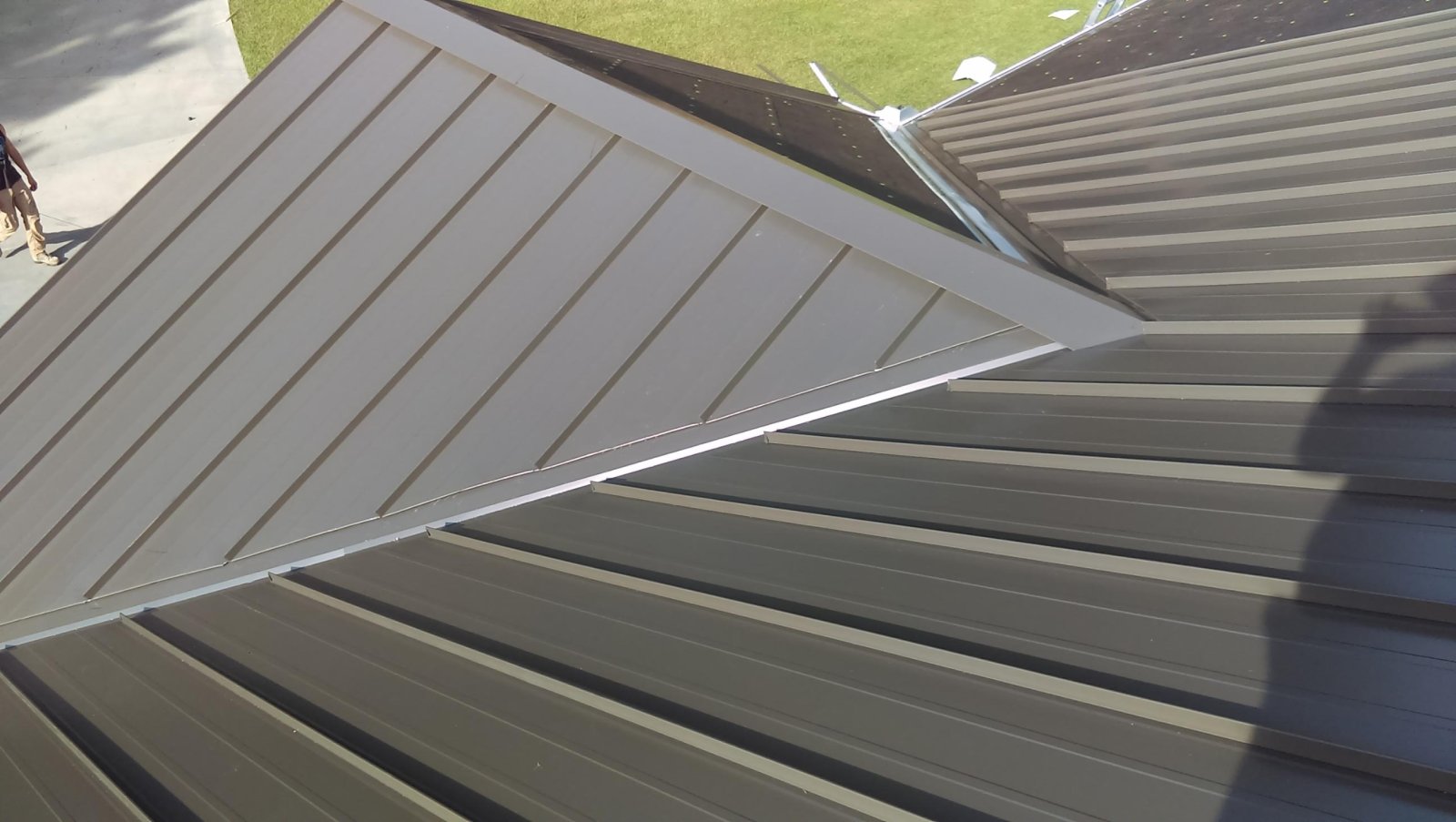
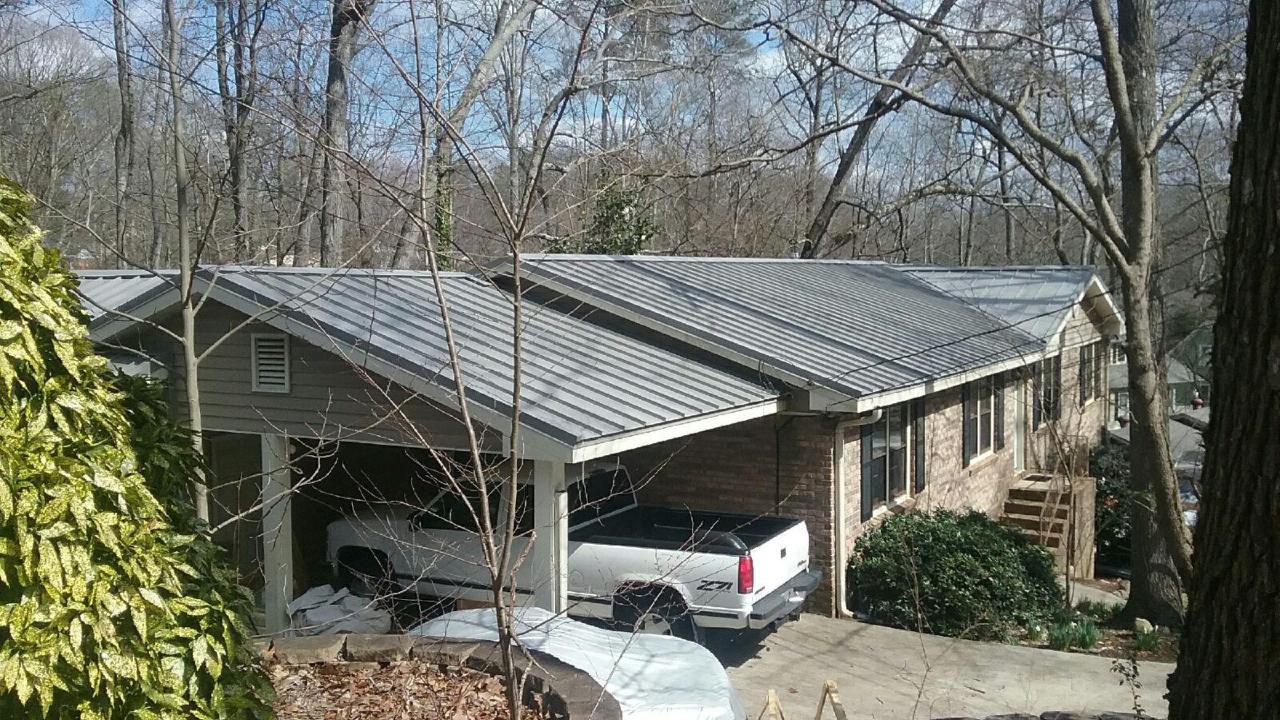
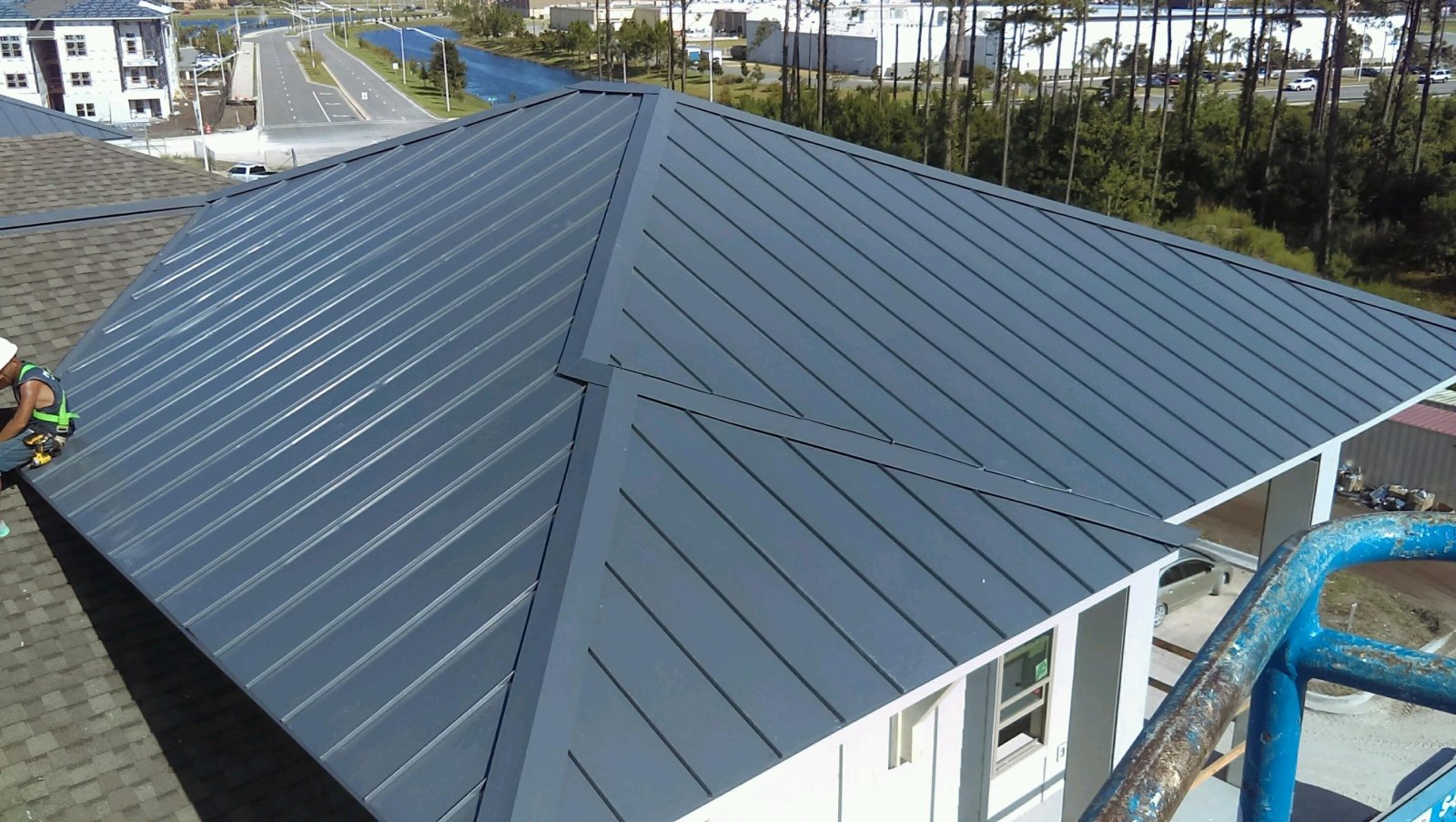
A standing seam metal roof is a metal roofing system with raised seams between panels and fasteners hidden beneath those seams. Standing seam is a system many Georgia homeowners consider because it addresses two common concerns: leaks and wind resistance.
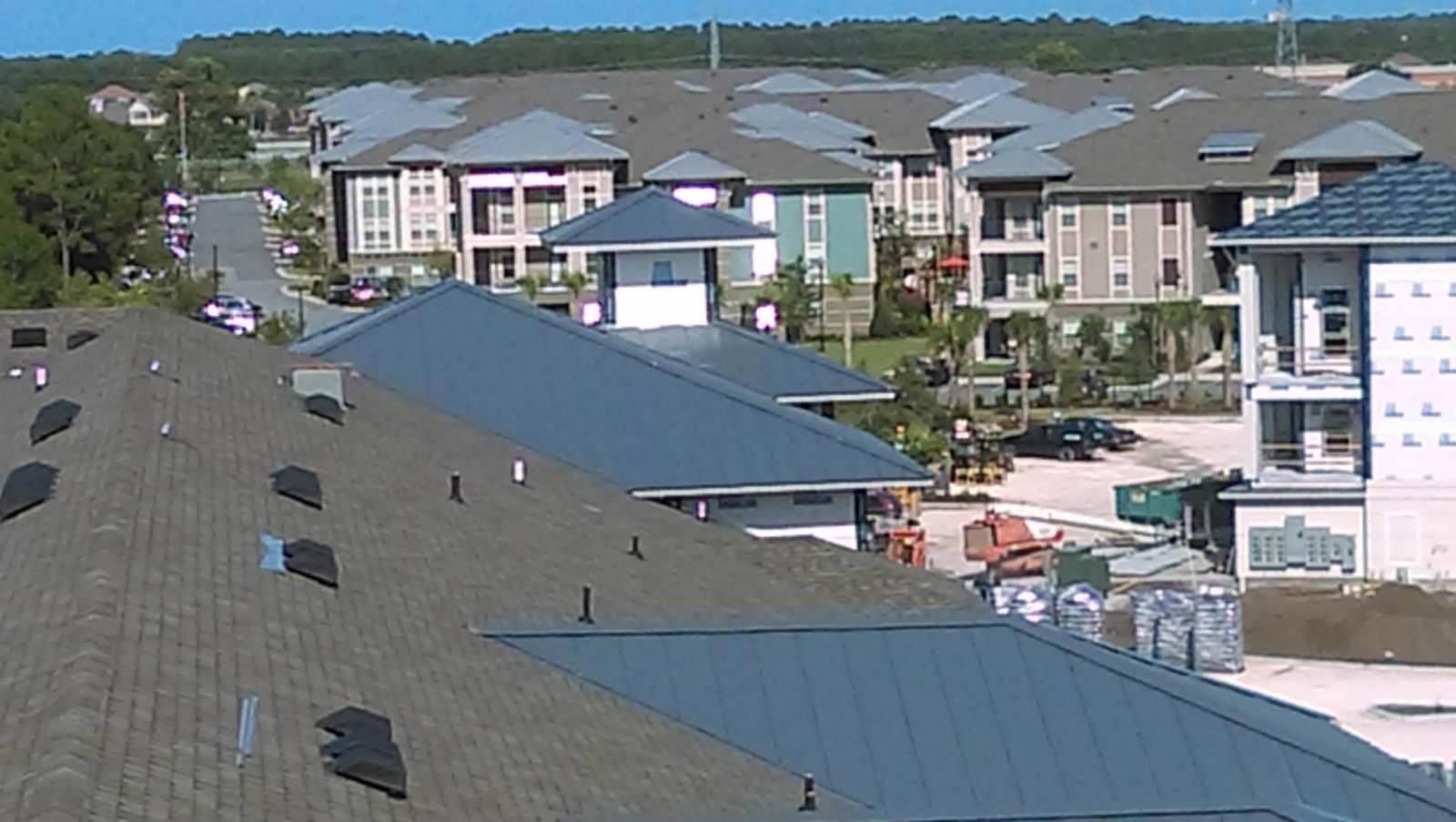
Trim detail and water intrusion are closely linked on metal roofs. At Timeless Tin, we treat flashing and trim as seriously as the panels. If you are weighing that performance against hiring an installer, our guide on finding reliable metal roofing contractors covers what to check before you sign.
Standing Seam Metal Roof Pros and Cons
Hidden fasteners reduce leak points. Panels attach with clips or fasteners beneath the raised seam, so no exposed screw heads work against rain. On an exposed-fastener system, every fastener is a potential entry point once its sealing washer ages.
Raised seams add stiffness and wind resistance. The folded seam acts like a structural rib running up the slope, helping the panel resist uplift in high-wind events. Actual performance depends on panel gauge, clip spacing, deck attachment, and local code requirements.
Coatings hold color and resist corrosion. Standing seam panels carry a 50-year limited paint warranty and a 25-year rust/corrosion-free warranty on applicable Galvalume products, subject to terms and conditions.
Long service life with modest upkeep. A metal roof is not maintenance-free, but the routine is simple: keep debris off, keep penetrations and flashing sound, and address issues early.
Higher upfront cost. Standing seam generally costs more than an exposed-fastener AG Panel system because the panels, clips, and labor are more involved.
It demands a skilled crew. Seams must be formed and closed correctly, clips spaced per the manufacturer's requirements, and trim detailed to shed water. A rushed install shows up later as oil-canning, backed-out fasteners, or water finding a path at a valley or penetration.
Thermal movement is real. Metal expands and contracts with temperature swings. Good design accounts for that with the right clip system and panel length limits; panels installed without that allowance can develop noise, fastener stress, or seam issues.
Noise and suitability limits. On an open-framed structure or a home with minimal attic insulation, rain and hail can be louder.
Before you compare quotes, learn how to identify quality metal roofing by reading panel gauge, coatings, and warranty terms. Our standing seam vs AG panel comparison covers cost, durability, and leak risk side by side.
Here is a quick scan of the main advantages and drawbacks of standing seam metal roofing.
| Feature | What It Means | Consideration |
|---|---|---|
| Hidden fasteners | Clips or fasteners sit beneath the raised seam | Reduces leak points versus exposed fasteners |
| Raised seams | Folded seam acts like a structural rib | Wind resistance depends on gauge, clips, deck, code |
| Coatings | 50-year limited paint warranty | 25-year rust/corrosion-free warranty on applicable Galvalume |
| Service life | Long life with modest upkeep | Not maintenance-free; keep debris off and flashing sound |
| Upfront cost | Higher than exposed-fastener AG Panel | Premium buys concealed fasteners and cleaner look |
| Workmanship warranty | 10 years on standing seam | Versus 5 years on AG Panel |
| Installation skill | Seams formed and closed correctly | Rushed installs show oil-canning or leaks |
| Thermal movement | Metal expands and contracts | Needs right clip system and panel length limits |
What Drives Standing Seam Metal Roof Cost
Standing seam metal roof cost depends on several interacting variables, which is why two homes of similar square footage can land in very different places.
Panel profile and gauge. Heavier gauge and a more pronounced seam profile cost more but offer more stiffness and a more defined look. Thinner panels cost less upfront but can be more prone to oil-canning and handling damage.
Roof pitch and complexity. A simple gable roof with long, uninterrupted runs is the most efficient standing seam job. Dormers, multiple valleys, hips, skylights, or frequent penetrations require more cutting, trim, and labor, and every transition must be flashed correctly.
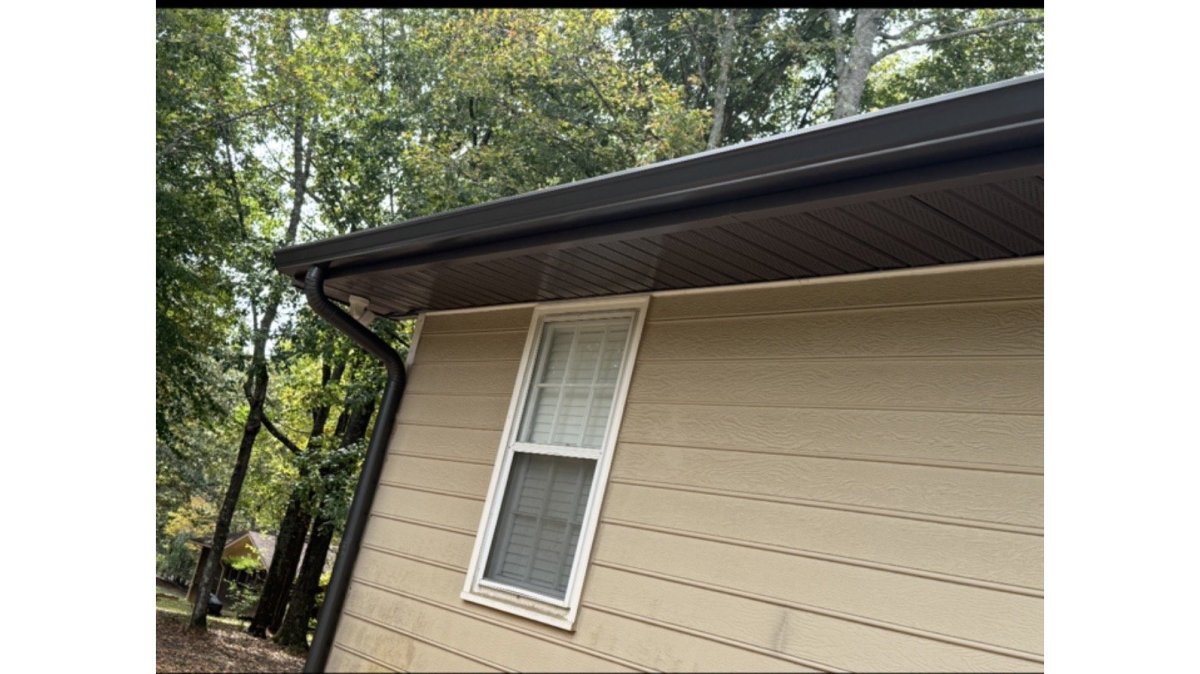
Trim package. Flashing, ridge caps, valley metal, eave trim, and gable trim are a meaningful part of the total. Our metal soffit and fascia work finishes those edges properly, so the trim package is detailed to shed water rather than just look finished.
Coatings and corrosion protection. Better finishes cost more and carry longer limited warranties. Our guide to metal roof corrosion warranties explains what those warranties actually cover in Georgia's humidity.
Removal and deck condition. If the existing roof has to come off, that adds labor and disposal. Soft spots or deck repair add scope a quote may not assume.
Pricing depends on the specifics of each project, including trim work, so contact Timeless Tin for a current quote.
Upfront cost versus lifecycle cost. The quote is the upfront cost; lifecycle cost is what you spend to install, maintain, repair, and eventually replace the roof.
A common myth is that metal roofing is always out of reach. Some metal options can land close to the cost of a full tear-off with new underlayment and new shingles, depending on the project.
For a direct side-by-side on cost, durability, and leak risk, see standing seam vs AG panel roofing compared. When you are ready to talk scope, request a standing seam metal roof estimate and we will review your roof and trim details to put together a quote for the actual job.
Standing Seam vs. AG Panel Roofing
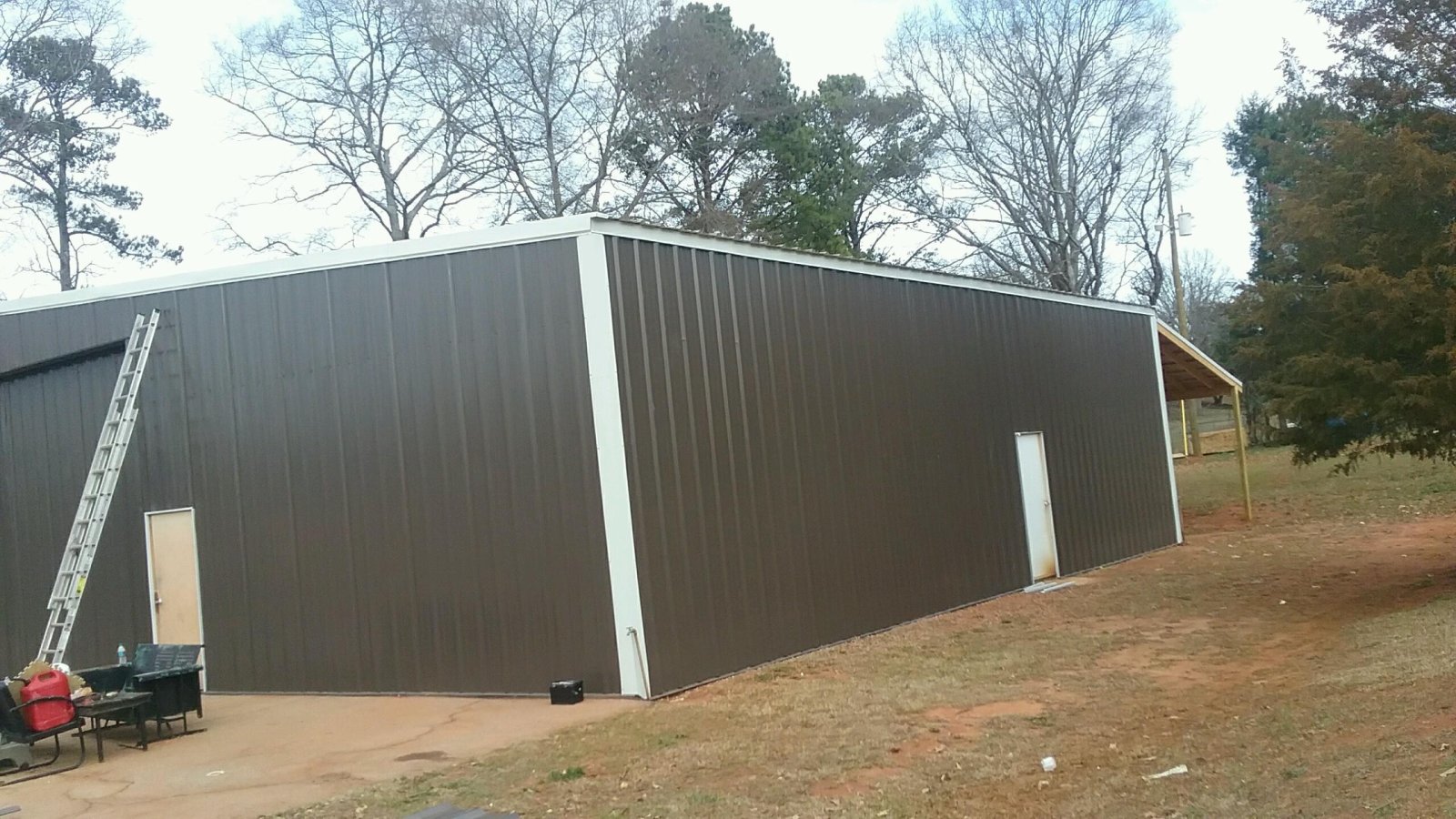
Choosing between standing seam and AG Panel comes down to budget and expectations. AG Panel uses exposed fasteners and costs less. Standing seam hides the fasteners and carries a longer workmanship warranty from us.
For a direct side-by-side on cost, durability, and leak risk, see standing seam vs AG panel roofing compared.
Standing seam is not the right roof for every budget, and we will tell you when AG Panel fits better. Timeless Tin has installed metal roofing across Georgia since 2001, specializing strictly in metal work with a 10-year workmanship warranty on standing seam and a 50-year limited paint warranty on qualifying panels. Contact us for a free estimate and we will walk your roof, explain the trim details, and give you a straight answer.
Frequently Asked Questions
What are the main benefits of a standing seam metal roof?
The biggest benefit is the concealed fastener design. Screws are hidden under the raised seams, so there are no exposed washers to fail over time. That design, combined with panel profiles that shed water well, can help reduce leak points. Standing seam also offers clean lines and curb appeal, and Galvalume products provide corrosion resistance. At Timeless Tin, our standing seam installs carry a 10-year workmanship warranty, with a 50-year limited paint warranty and a 25-year rust/corrosion-free warranty on applicable Galvalume products, subject to terms and conditions.
What are the disadvantages of standing seam metal roofing?
Cost is the main one. Standing seam metal roof cost runs higher than exposed-fastener systems because the panels and the installation are more involved. It also takes a skilled crew: trim, flashing, and seam work have to be precise, and that detail is where leaks on metal roofs start. Cosmetic damage is possible if hail or a falling branch strikes a panel. And it is not maintenance-free, despite what you may hear. These trade-offs are worth weighing against long-term value, since standing seam is not right for every property.
How does standing seam roofing compare to AG Panel?
Standing seam uses concealed fasteners and raised seams, which gives it better weather-tightness and a cleaner look. AG Panel is an exposed-fastener system: the screws sit on the panel face with washers sealing each one. AG Panel typically costs less and installs faster, which makes it a common choice for pole barns, shops, and budget-conscious projects. Standing seam costs more but offers stronger leak prevention and a longer warranty package. Which one fits your building depends on your budget, roof pitch, and how long you plan to own the property.